I did, however, email ScoLibris about the Malian titles in the Editions du Figuier titles that I mentioned in my last post and made an appointment to visit them the following Wednesday at their Paris office. Although I was scheduled for 6:30 pm, I went early because I wanted to get there before dark. A good thing, too, because the tiny entry door was sandwiched between two restaurants and the number was displayed on the door frame and not visible from the street.
 | |||
| Note the tiny street number above the digicode |
I only bought five titles because I had to pay in cash and didn't count on shipping charges. I'll be taking them to the Mediatheque Municipale in Ouagadougou, but I emailed Friends of African Village Libraries about them because they look like something they can use as well.

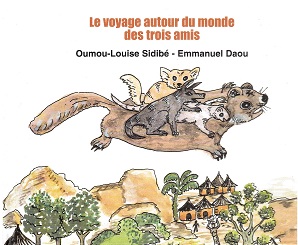
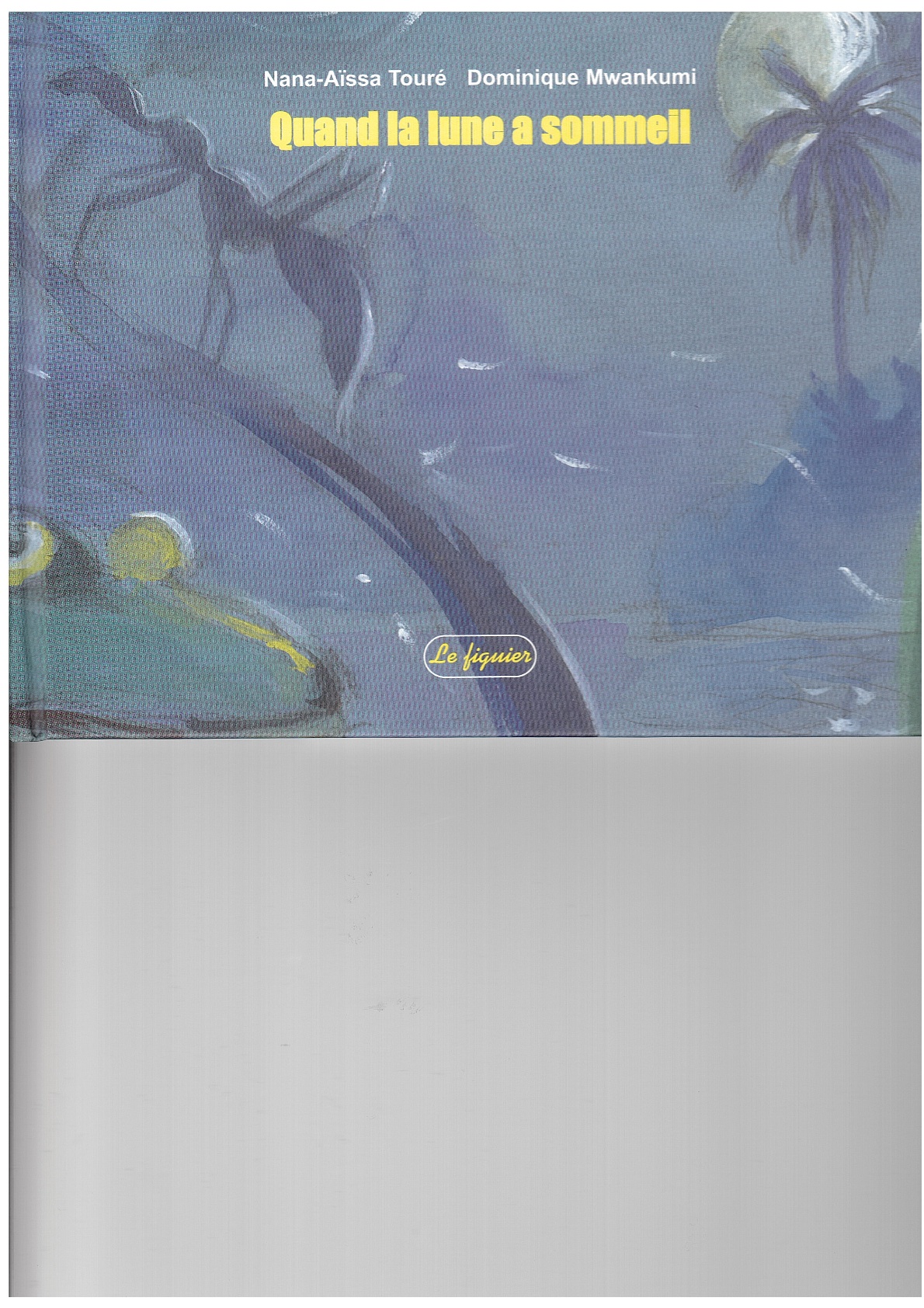
You can see samples of the Mali folktales series by clicking on the links below.
http://www.scolibris.fr/fichier/imgCK/4858074493amis.jpg
http://www.scolibris.fr/fichier/imgCK/1431514299dromadaire.jpg
http://www.scolibris.fr/fichier/imgCK/1416839297luneasommeil.jpg
The Editions du Figuier titles include a series on African trades and professions for young people. Here's one on weaving:
http://www.scolibris.fr/fichier/imgCK/1230244722tisserand.jpg
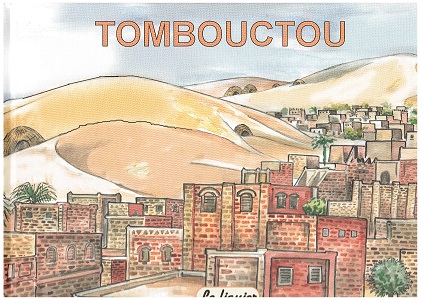
There is also a travel series to familiarize young people with local sites. Here's one on the historic Malian city of Timbuktu:
http://www.scolibris.fr/fichier/imgCK/1225683352tombouctou.jpg
As a librarian, I am well aware of the importance and power of literacy. Before I left the US, I read an interesting article in the January/February issue of Christianity Today entitled "The World the Missionaries Made". The article examines a recent study in the prestigious American Political Science Review by Robert Woodberry that shows, contrary to the negative picture of Christian missionary activity painted by authors like Barbara Kingsolver or James Michener, Protestant missionaries were arguably the greatest force for modern democracy!
Woodberry distinguishes between Catholic and Protestant missions, and state funded and independent missions, as it was the independent Protestant missions that were effective in this way. Apparently, instead of focusing on educating only the elite, independent Protestant missions focused on mass literacy and mass education so that all could access the Bible in their own language. In order to do this, it required that everyone, including women and the marginalized, would need to know how to read. And, according to Woodberry, without broad-based literacy there can't really be democratic movements.
My observation has been that this thesis bears out in Francophone Africa where the elite are educated but where any early education the local population receive is in French, a language never really mastered by most. Learning is by rote, at best, and neither clearly understood or questioned.
If you're interested in reading more, the original article is available below by clicking on the link:
http://www.google.com/url?sa=t&rct=j&q=&esrc=s&frm=1&source=web&cd=2&ved=0CDMQFjAB&url=http://www.researchgate.net/publication/235503063_The_Missionary_Roots_of_Liberal_Democracy/file/9fcfd511c3fb6ca22b.pdf&ei=9-TWUrG6K-bJsQT224DoAw&usg=AFQjCNGxxX0FRF5hQ3SosWRdQjU9LCjayw&bvm=bv.59378465%2cd.cWc
And speaking of literacy, I would like to mention that the Showalters just finished up a word-gathering project among the Kaan people in southern Burkina Faso, with the intent of collecting 10,000 or more words and phrases to create a French/Kaansa dictionary. I understand from them that the turn-out of the local people for training was encouraging and enthusiasm for the project was high. The Kaan people have a king, who is very interested in the project as well, and was promoting participation of his people. I had the fortune of meeting him when I visited the Showalters in Obiré a couple of years ago, and he was among Cathie Showalter's students in a Kaansa literacy class she once led! Cathie will be leaving for the States just before I get to Burkina Faso, so I will miss seeing her there, but I plan to see Stuart as I'm bringing some requested candle wicks for him from the US!
 | ||||
| Language gathering workshop in Obiré, Burkina Faso |

And since I'm taking advantage of being in Paris, Tuesday I had dinner with a friend at a restaurant my niece discovered last fall, not far from my apartment. Called Le Passage Secret, it lives up to its name because it is not at easy to find! Judging from the reviews on TripAdvisor, it looks like not too many Americans have discovered it either, as the majority of reviews are in French. I understand from the waiter that the American clientele is growing, however. . . It got a glowing review from me and is definitely worth a detour if you're in the neighborhood!
 |
| Le Passage Secret Restaurant |
 | |||
| Note: bistrot pour Becs Fins [refined palates] |
 | ||
| the restaurant bar |
 |
| My friend Rebecca enjoying her dessert |
 |
| The old La Samaritaine department store building |
 |
| One of about 20 remaining historic "passages" |
 |
| African art in one of the boutiques in the passage |
 |
| Whimsical sculptures by Niki de Saint-Phalle and Jean Tinguely |


No comments:
Post a Comment